Florida Roofing Guidance
Roof Insurance & Claims
Helpful information before dealing with roof damage, inspections, documentation and the roof insurance claim process.
Roof damage can create questions about inspections, insurance coverage, repair estimates and what to do next. Covenant Roofing® helps Florida property owners understand the condition of their roof and provides clear documentation of the roofing work that may be needed.
Understanding Roof Insurance Claims and the Damage Process
Understanding roof insurance claims can be difficult because finding roof damage does not automatically tell you whether the damage is covered, whether a claim should be filed or whether the roof needs to be repaired or replaced. Those decisions depend on the condition of the roof, the cause and timing of the damage and the language of your individual insurance policy.
A roofing contractor can inspect the roof, identify visible conditions, photograph damage and prepare an estimate for roofing work. Your insurance company determines whether a loss is covered and how the claim will be adjusted under your policy.
Before signing contracts or making major decisions, read your policy, document the condition of the property and ask your insurance company or agent to explain any deadlines, deductibles, exclusions or coverage questions that apply to you.
Steps to Take Before Repairs Begin
Safety comes first. Once the property is safe to access, careful documentation and clear communication can make it easier to understand the damage and the next steps.
STEP 1
Protect People and Property
Stay away from unsafe areas, fallen power lines, unstable ceilings and active water intrusion. Use reasonable temporary measures to prevent additional damage when it is safe to do so.
STEP 2
Photograph the Damage
Take clear photos and videos of visible roof damage, interior leaks, damaged ceilings, fallen debris and affected belongings before damaged materials are removed.
STEP 3
Review Your Policy
Look for information about covered causes of loss, hurricane or roof deductibles, exclusions, repair responsibilities and deadlines for reporting damage.
STEP 4
Contact Your Insurance Company
Ask how to report the damage, what documentation is required, whether an adjuster will inspect the property and what you should do before permanent repairs begin.
STEP 5
Schedule a Roof Evaluation
A licensed roofing contractor can inspect accessible roof areas, identify visible roofing concerns and prepare photographs and an estimate for the roofing work that may be needed.
STEP 6
Keep Every Record
Save claim numbers, emails, photographs, inspection reports, estimates, receipts, invoices and notes from conversations with contractors and insurance representatives.
What Should Be Documented After Roof Damage?
Good documentation creates a clearer record of the roof’s condition. It does not guarantee insurance coverage, but it can help the homeowner, contractor and insurance company understand what was observed.
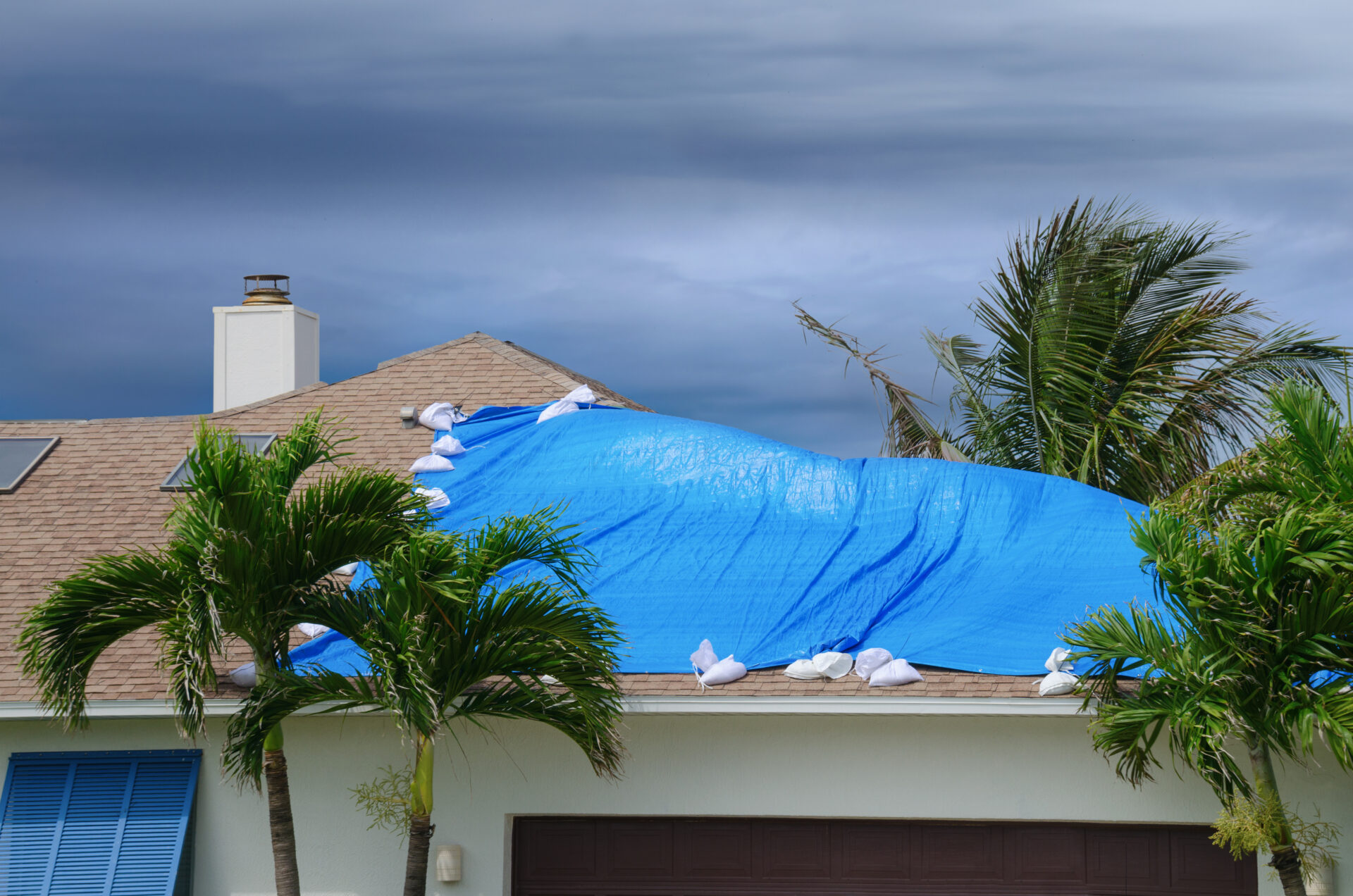
A professional roof evaluation can document visible damage, roofing conditions and the work that may be needed without determining coverage during roof insurance claims.
A Roofing Evaluation May Document
- Missing, lifted, creased or damaged shingles
- Damaged ridge caps, flashing or roof accessories
- Visible impact marks or displaced roofing materials
- Interior staining or signs of water intrusion
- Soft, deteriorated or damaged roof decking
- Damage around vents, skylights, chimneys or penetrations
- The apparent age and general condition of the roof
- Recommended repair or replacement work
Records Homeowners Should Keep
- Before-and-after photographs
- The date the damage was discovered
- Weather or storm information
- Receipts for temporary repairs
- Roof inspection reports
- Written roofing estimates
- Insurance correspondence
- Claim and adjuster contact information
How Roof Age Can Affect Roof Insurance Claims in Florida
Roof age can affect underwriting, inspections, available coverage and how an insurer evaluates the condition of a property. However, roof age alone does not always tell the complete story.
Roof Age Is Not the Same as Roof Condition
Two roofs of the same age may be in very different condition depending on materials, installation, maintenance, ventilation, weather exposure and prior damage.
An Inspection May Be Requested
An insurer may request a roof inspection, four-point inspection or documentation showing the roof’s condition and estimated remaining useful life.
Policy Requirements Can Differ
Insurance companies may have different underwriting guidelines, documentation requirements and coverage options. Ask your agent or insurer what applies to your specific policy.
Florida Roof-Age Protections
Florida law generally prevents an insurer from refusing to issue or renew a homeowners policy solely because a roof is less than 15 years old. For a roof that is at least 15 years old, the homeowner must generally be allowed to obtain an authorized inspection before replacement is required as a condition of coverage. The exact application depends on the property, insurer, inspection findings and current law.
What a Roofing Contractor Can and Cannot Do
Understanding each person’s role during roof insurance claims can help prevent confusion about inspections, estimates, coverage decisions and who is permitted to represent the policyholder.
A Roofing Contractor Can
- Inspect and photograph accessible roof conditions
- Identify visible damage and roofing concerns
- Prepare a roofing repair or replacement estimate
- Explain roofing materials and installation requirements
- Document additional damage discovered during work
- Communicate factual construction information
A Roofing Contractor Does Not
- Decide whether your insurance policy provides coverage
- Interpret policy language on your behalf
- Determine what your insurer must pay
- Negotiate or adjust your claim unless separately licensed
- Guarantee that roof damage will be covered
- Replace advice from your insurer, attorney or licensed adjuster
Covenant Roofing® is a licensed roofing contractor. We provide roofing evaluations, documentation and construction estimates. We do not act as your insurance adjuster or determine whether a claim is covered.
Questions to Ask During the Roof Claim Process
Write down the answers and ask for important explanations in writing whenever possible.
Questions for Your Insurance Company
- What caused losses are covered under my policy?
- What deductible applies to this damage?
- Are there deadlines for reporting the loss?
- Can temporary repairs begin before the inspection?
- What photographs or documents should I submit?
- Will depreciation be withheld from the first payment?
- What is required to recover withheld depreciation?
- How are additional damages submitted for review?
Questions for the Roofing Contractor
- What damage or wear did you observe?
- Can the issue be repaired safely and effectively?
- What materials and work are included in the estimate?
- How will damaged decking be handled?
- Are permits, disposal and cleanup included?
- Who will perform the roofing work?
- What workmanship and material warranties apply?
- How will unexpected conditions be documented?
Why the Contractor Estimate and Insurance Estimate May Differ
During roof insurance claims, an insurance estimate and a roofing contractor’s estimate may be prepared for different purposes and may not initially include the same materials, quantities or construction details.
Differences May Involve
- Roof measurements and material quantities
- Local labor or disposal costs
- Permit and inspection requirements
- Flashing, ventilation or accessory replacement
- Building-code requirements
- Decking damage that was not initially visible
- Different repair methods or material specifications
When Additional Damage Is Found
Some roof conditions cannot be confirmed until existing materials are removed. If additional damage is discovered, the contractor can photograph the condition and prepare a written estimate describing the additional roofing work.
The homeowner should ask the insurance company how supplemental documentation should be submitted and whether approval is required before additional work proceeds.
Roof Insurance Claims FAQs
These roof insurance claims FAQs provide general educational information. Your policy, insurer and individual circumstances may be different.
Should I call a roofer or my insurance company first?
If there is active damage or a safety concern, protect the property and contact your insurance company to ask about reporting requirements and emergency repairs. A licensed roofing contractor can also evaluate and document the roof’s condition. During roof insurance claims, clear photographs, inspection findings and written records can help everyone understand what was observed, but neither contacting a roofer nor filing a claim guarantees that the damage is covered.
Does a roofing contractor decide whether my damage is covered?
No. A roofing contractor can inspect the roof, document visible conditions and estimate the roofing work. Your insurance company determines whether the loss is covered under your policy.
What documentation should I keep after roof damage?
Documentation can be especially important during roof insurance claims. Keep photographs, videos, inspection reports, contractor estimates, receipts for temporary repairs, invoices, claim correspondence, adjuster information and notes from important conversations.
Can I make temporary repairs before the insurance inspection?
Policies generally require homeowners to take reasonable steps to prevent additional damage, but you should contact your insurer for instructions. Photograph the original damage before making temporary repairs and keep all receipts.
Does an older roof automatically have to be replaced?
Not necessarily. Roof age, condition, remaining useful life, roofing material and insurer requirements may all matter. Florida law includes certain inspection rights involving roofs that are at least 15 years old, but individual underwriting requirements can vary.
Why is the roofing estimate different from the insurance estimate?
During roof insurance claims, the roofing contractor’s estimate and the insurance estimate may use different measurements, labor assumptions, materials or scopes of work. Additional damage may also become visible after roofing materials are removed. Ask both parties to explain the specific differences in writing.
Can Covenant Roofing® negotiate my roof insurance claim?
Covenant Roofing® provides roofing evaluations, damage documentation and construction estimates. We do not act as your insurance adjuster, interpret coverage or negotiate the claim on your behalf.
Florida Insurance and Storm Information
Use official sources when reviewing roof insurance claims, insurance requirements, contractor rules and storm information.
Understand the Condition of Your Roof
Whether you have visible storm damage, an active leak, roof-age concerns or questions related to roof insurance claims, Covenant Roofing® can inspect the roof and explain the roofing work that may be needed.
Insurance coverage is determined by your insurer and the terms of your policy. Covenant Roofing® is a roofing contractor and does not provide legal advice, interpret insurance coverage or adjust insurance claims.